Sometimes a rest day isn’t really a rest day. Yesterday was a planned day off — but not entirely from responsibility. I had a final class to teach remotely, my students presenting their capstone projects, and I wasn’t about to miss it just because I happened to be living out of a backpack in the mountains of southwest Virginia.
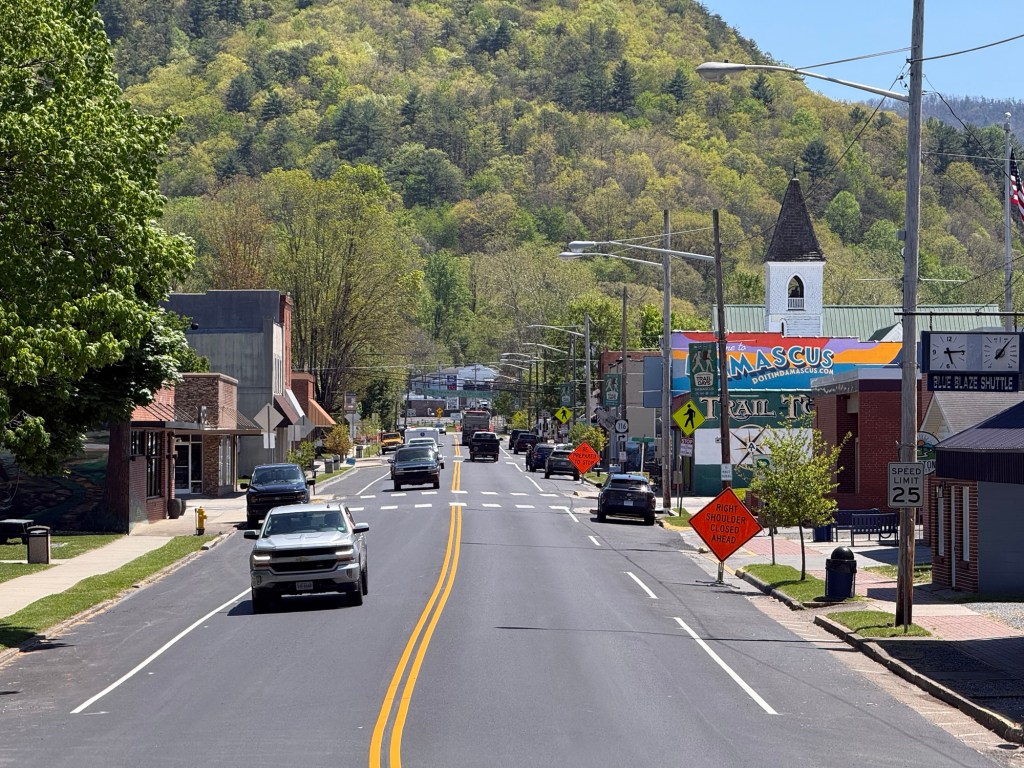
Not wanting to spend the whole day cooped up at Lady Di’s, I laced up my shoes and headed out for a walk down to the Food City, a grocery store about a mile and a half outside of town. The walk itself became its own small adventure — I slowed down to read the historic placards that line the streets of Damascus, ducked into a shop or two, and let myself move at the kind of unhurried pace that a trail town naturally invites. There was nowhere to be and no miles to make.
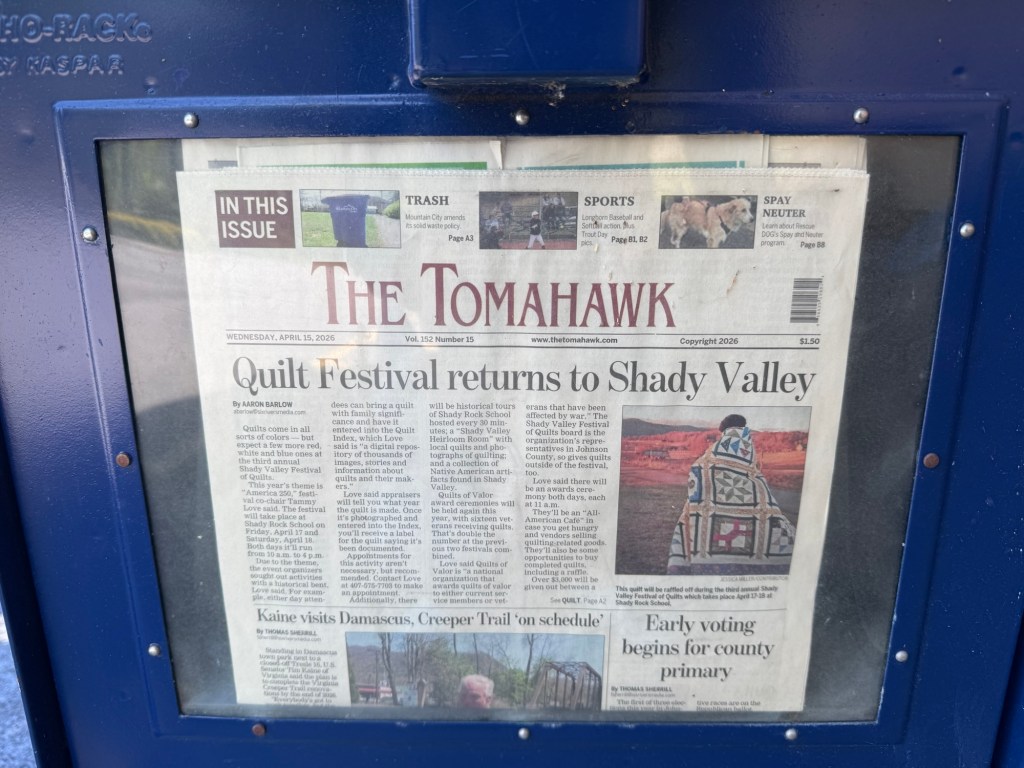
Food City delivered exactly what a hungry hiker needs: a bag of chips, a sandwich, and a chocolate milk. Simple pleasures. Out front of the store, I could’ve been mistaken for a homeless man. As I was eating my lunch on the ground beside a newspaper box, my eye landed on the front page. The face staring back at me was Tim Kaine who had been in Damascus just a week earlier to provide an update on a $250,000,000 federal project to rebuild a large section of the Virginia Creeper Trail.
The trail had been devastated two years prior by Hurricane Helene, which tore through the region and took out significant stretches of the beloved rail-trail corridor.
On the walk back to Lady Di’s, I stopped into the Appalachian Trail Conservancy’s regional headquarters, mostly out of curiosity. That’s where I got the news that would reshape the next leg of my hike. A 22-mile detour is currently in effect off the Virginia Creeper Trail, where crews are in the process of replacing all of the trestles along the route. The alternative path runs along the Iron Mountain Trail — and as it turns out, that’s not just any reroute. The Iron Mountain Trail is the original Appalachian Trail through this area, the route that thru-hikers followed before the AT was redirected onto the Virginia Creeper Trail corridor in the 1970s.
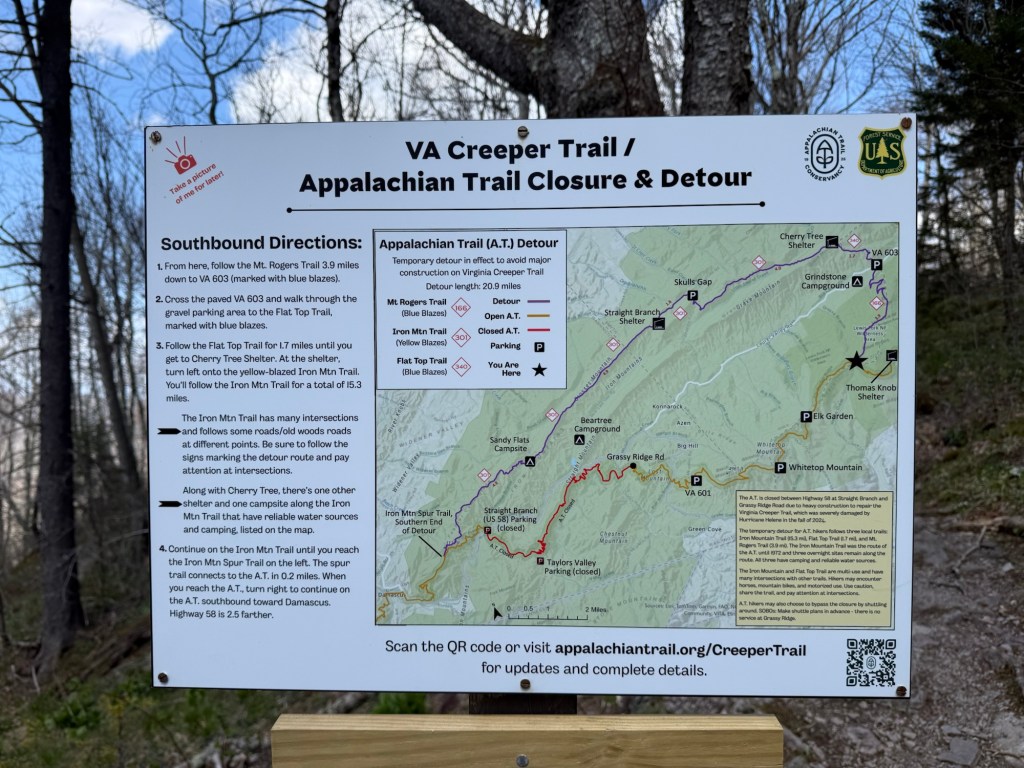
It’s a rugged, ridgeline path that trades the gentle, converted railroad grade of the Creeper for something older and steeper — more in keeping with the character of the AT as most people know it.
In a way, the detour is a step back in time. And I found myself looking forward to it.
 Virginia Nature Triathlon
Leave a comment